Happy National Pencil Day for those who celebrate
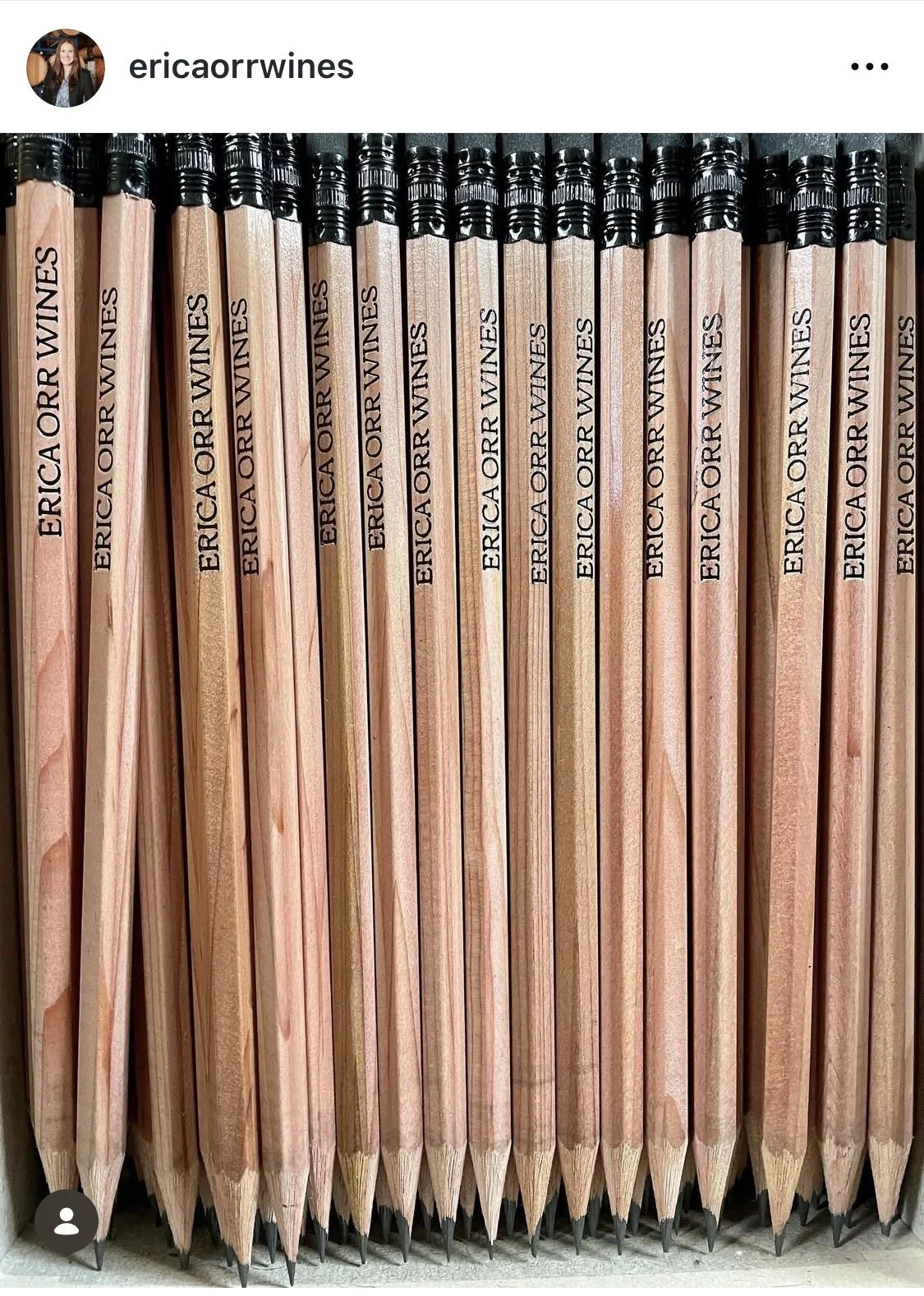
In honor of the anniversary of the first pencil patent registered on March 30, 1858, I want to share my appreciation for the simple joy of writing with a well-sharpened pencil. It is an analog luxury I have had the pleasure to enjoy in the lab for decades and one that I continue to seek out in foreign stationery stores during my travels.
To my Orr Wines customers: if you happen to visit India, I would love for you to bring back some Indian-made pencils to add to my collection.
While much of American pencil manufacturing has moved abroad—including the iconic Dixon Ticonderoga—there are still a few dedicated pencil makers remaining here in the U.S. My "Erica Orr Wines" pencils are made by the Musgrave Pencil Company, founded in 1916 in “Penciltown USA” AKA Shelbyville, Tennessee. While mine are made from white fir, they also produce a "heritage" line using local Tennessee red cedar.
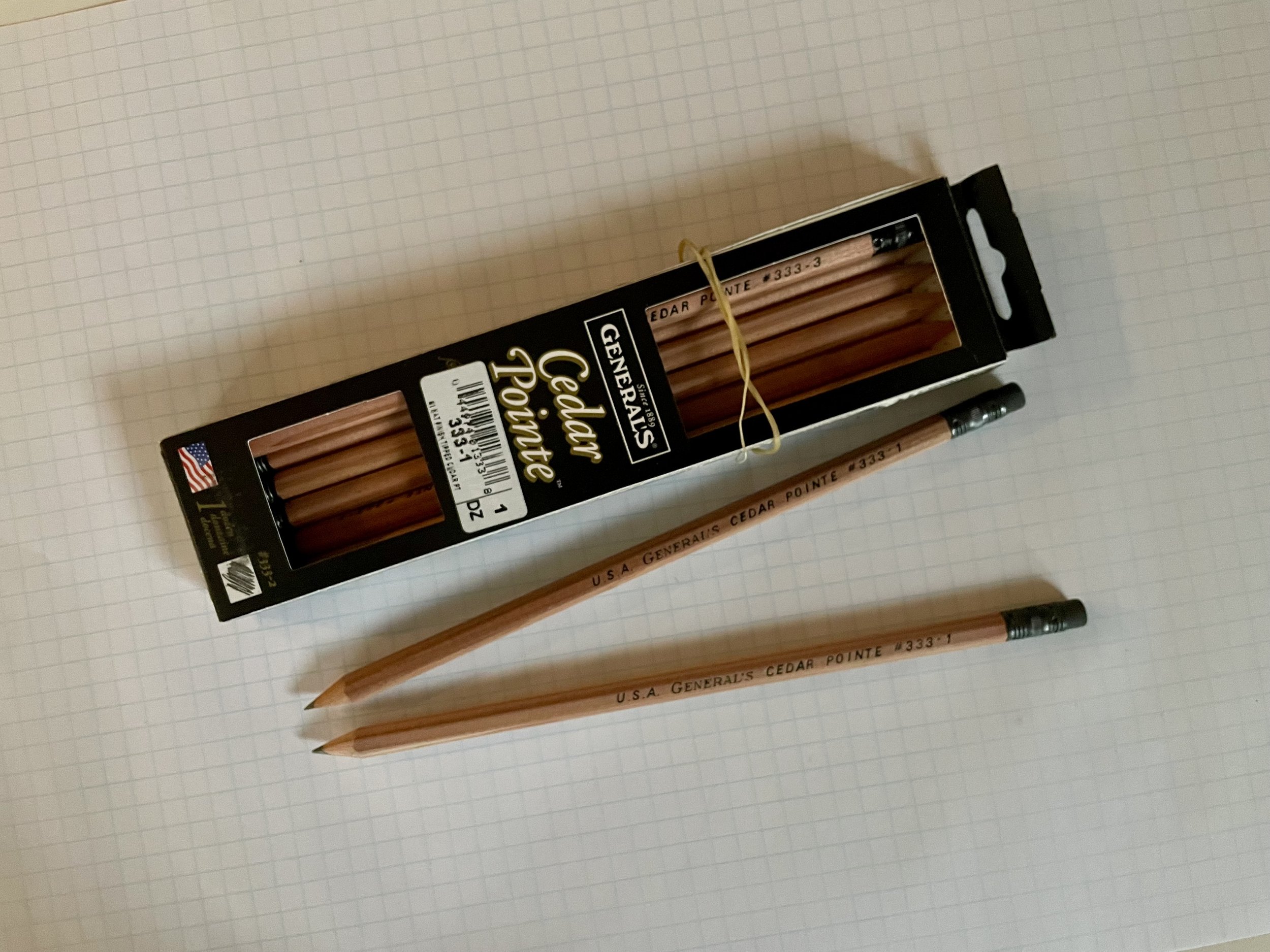
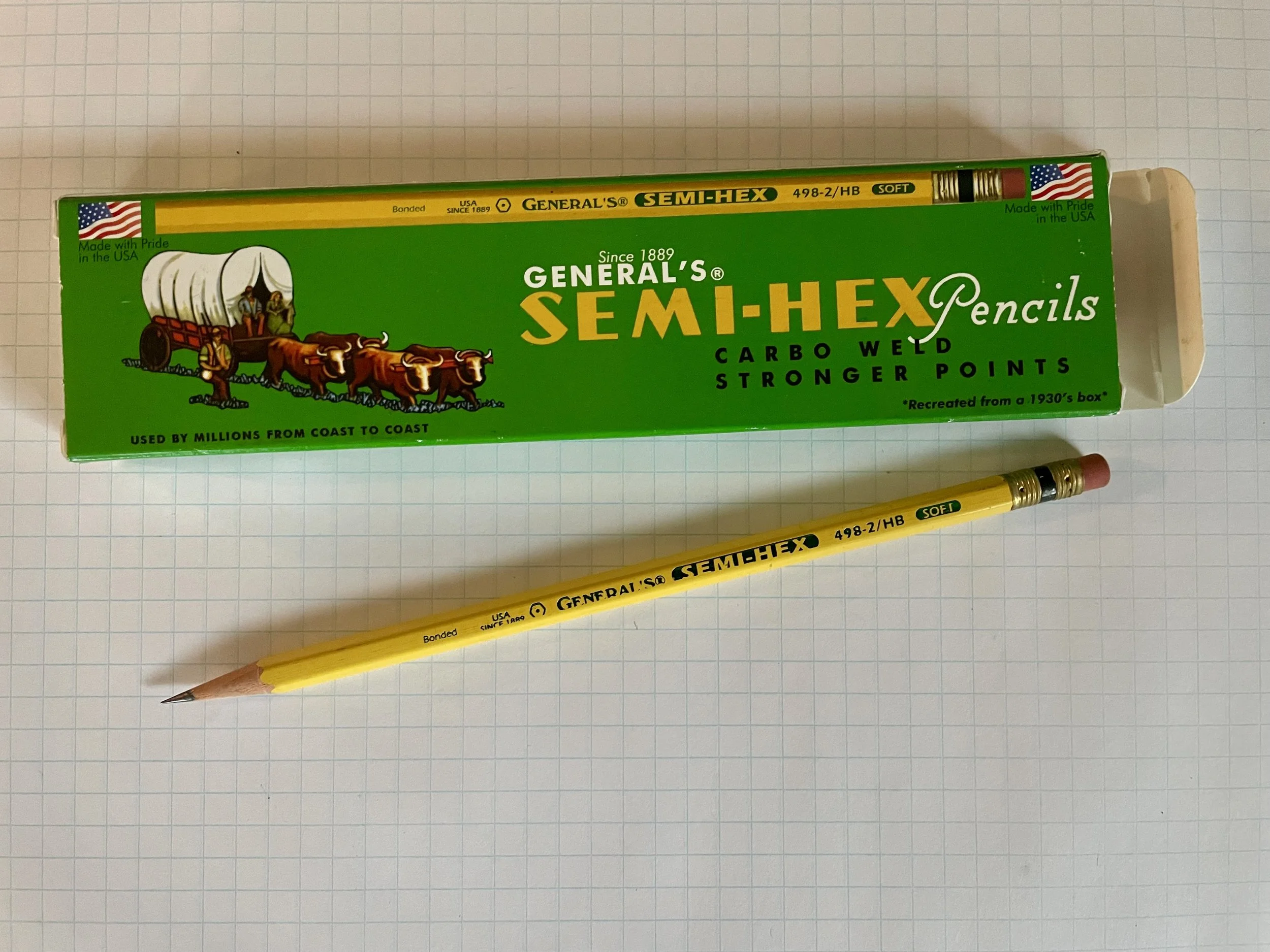
I’m a big fan the cedar pointe pencils from General Pencil Company in Jersey City, New Jersey founded in 1889. There was a beautifully shot photo essay about their factory in the New York Times. Those photos are currently on exhibit at Cooper Hewitt. Check it out if you are in NYC.
The Blackwing pencil was the favorite pencil of many American creatives including animators, writers, composers and playwrights. Famous for the slogan "Half the Pressure, Twice the Speed," the Blackwing 602 was originally introduced in 1934 by the Eberhard Faber Pencil Company. Interestingly, their factory was located on 42nd Street in New York, at the site where the United Nations building stands today. Eberhard Faber himself was a German-American entrepreneur from a long line of Bavarian pencil makers.
The Eberhard Faber Pencil brand has seen several transitions over the years:
- 1970s: Purchased by the German company Staedtler (see below for more info).
- 1988: Acquired by Faber-Castell USA (see below for more info).
- 1994: Sanford acquired the division and eventually integrated it into the Paper Mate brand.
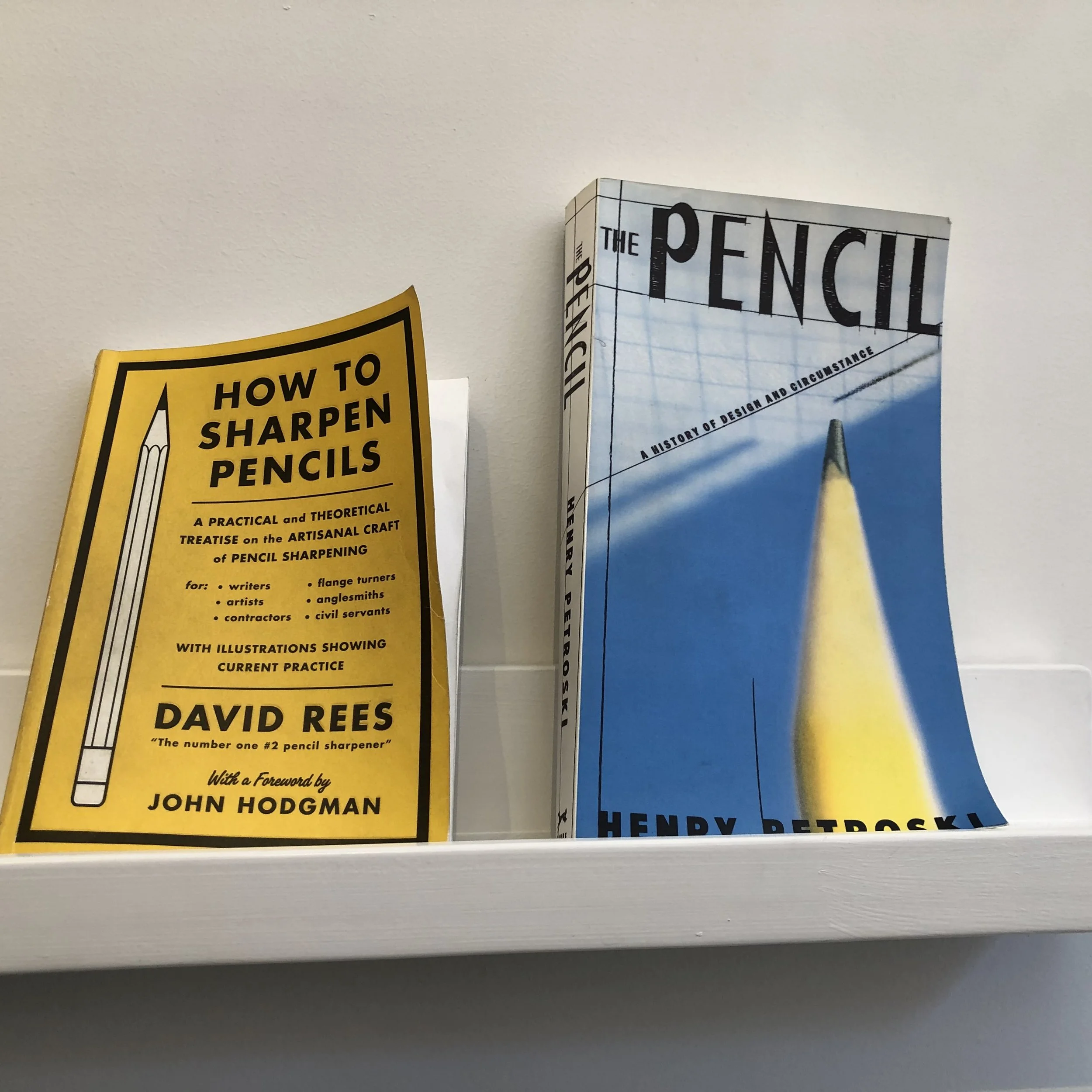
Who knew there was a Big Pencil?
In 1998, production of the Blackwing ceased because the special machine that made the weird smooshed ferrule for their rectangular eraser broke. During the 1990s, the annual orders for Blackwings were so low they “sunsetted” this pencil model. Then in 2011, the California Cedar Company in Stockton, California acquired the Blackwing name and revived the pencil under their Palomino label. I will admit that Blackwings are very cool looking but I have not found the right graphite blend for me. I am unwilling to sharpen my pencil all day long. Blackwings are manufactured in Japan with Japanese lead cores with Californian cedar wood casings.
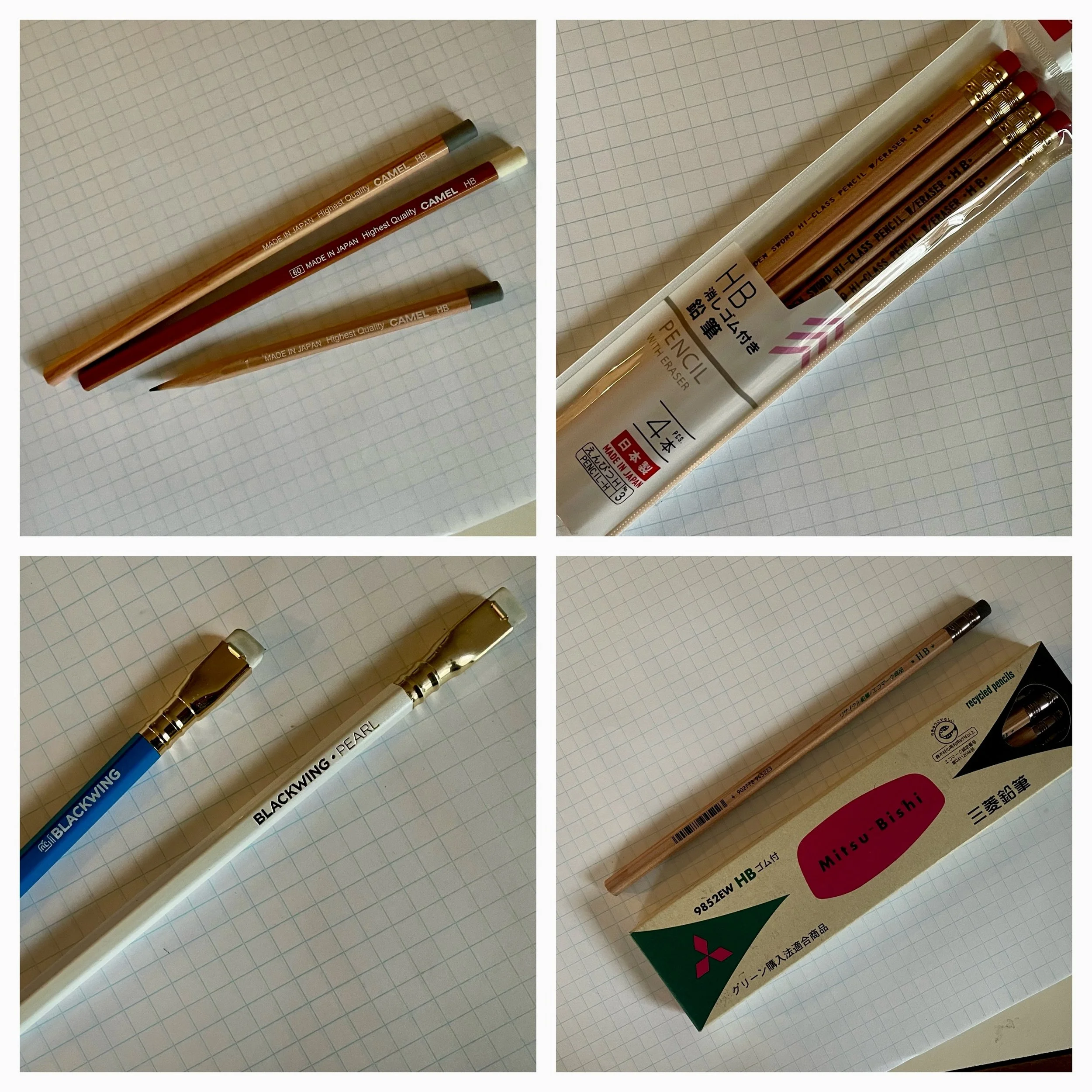
Japanese pencil makers Mitsubishi (founded 1887) and Tombow (founded 1913) both make excellent pencils - my problem, OK one of my problems, is that I am always looking for a pencil with an eraser on the end so that rules out a lot of highly acclaimed pencils. In reading about the history of Japanese pencil manufacturing I found this quote from Mr. Sugitani of Kita-boshi: "A pencil sacrifices itself to serve people. Both humans and pencils need cores." Testify
Daiso sells the “Golden Sword” - it’s a natural unlacquered incense cedar pencil made by the Eyeball Pencil Company in Tokyo. Tremendous value - 4 for $2.25. Both HB and 2B are very dark.
I also love the cool ferrule-less pencils from Camel. Clean look.
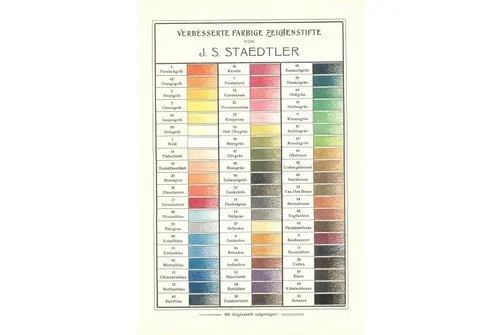
From Germany, Staedtler is literally the Original Gangster of pencils. There are records from 1662 that describe Friedrich Staedtler selling hand-crafted wood case graphite lead pencils. Generations later, Johann Sebastian Staedtler began industrial pencil production in Nuremberg. These guys invented colored pencils in 1844. I am more familiar with Staedtler white erasers and highlighters than their pencil offerings I think because of my dumb rule about needing an eraser on the back.
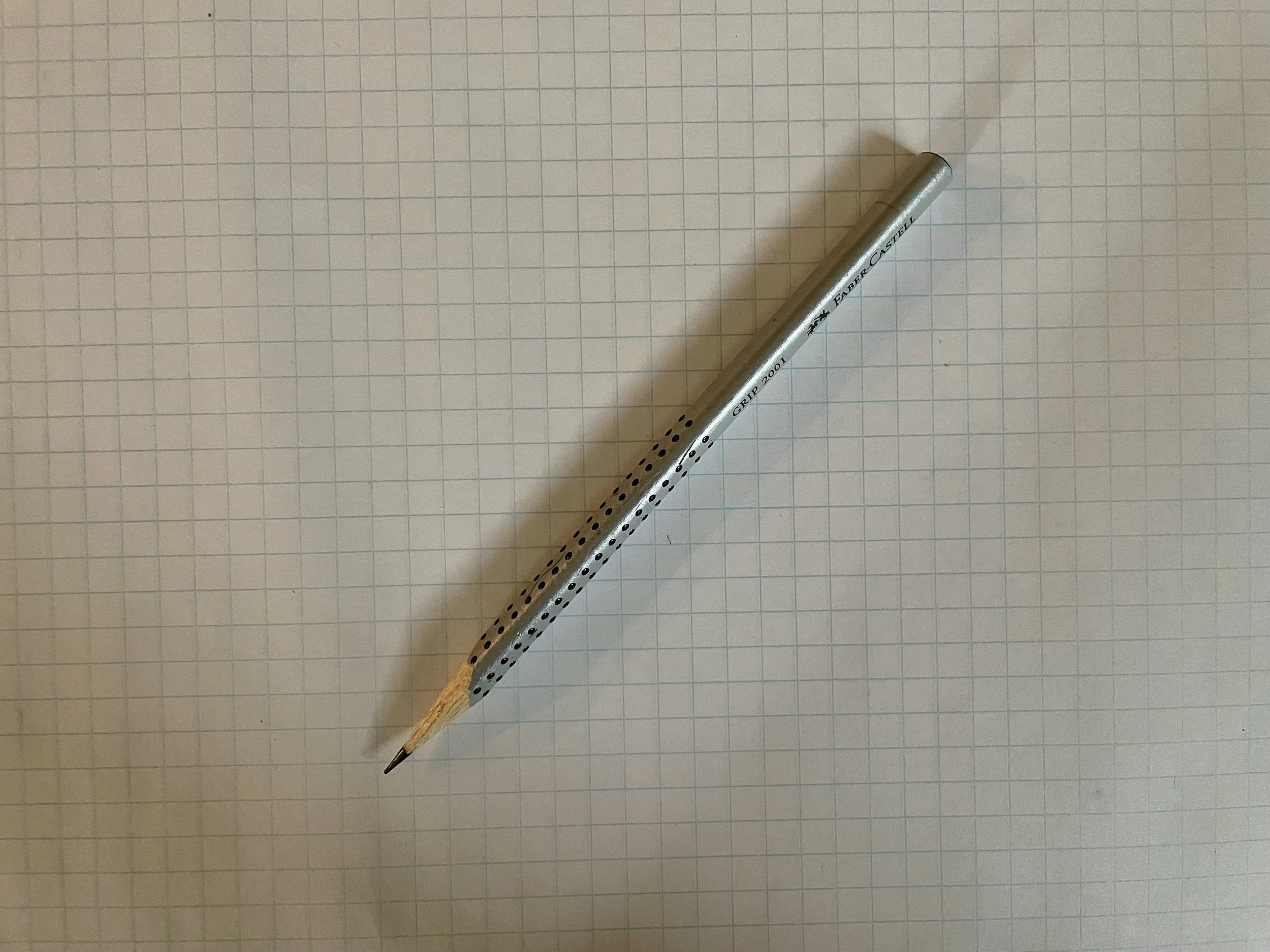
Faber-Castell’s history dates back to 1761 when it was founded in Stein, Germany. Now in their ninth generation and still family owned, Faber-Castell is a global brand used by artists and designers. I am a fan of their “grip” line - even though there is no eraser on the back. “The patented Grip zone prevents fingers from slipping. The ergonomic triangular shape ensures fatigue-free writing.” That silver paint job really screams German engineering to me. Reminds me of a silver BMW.
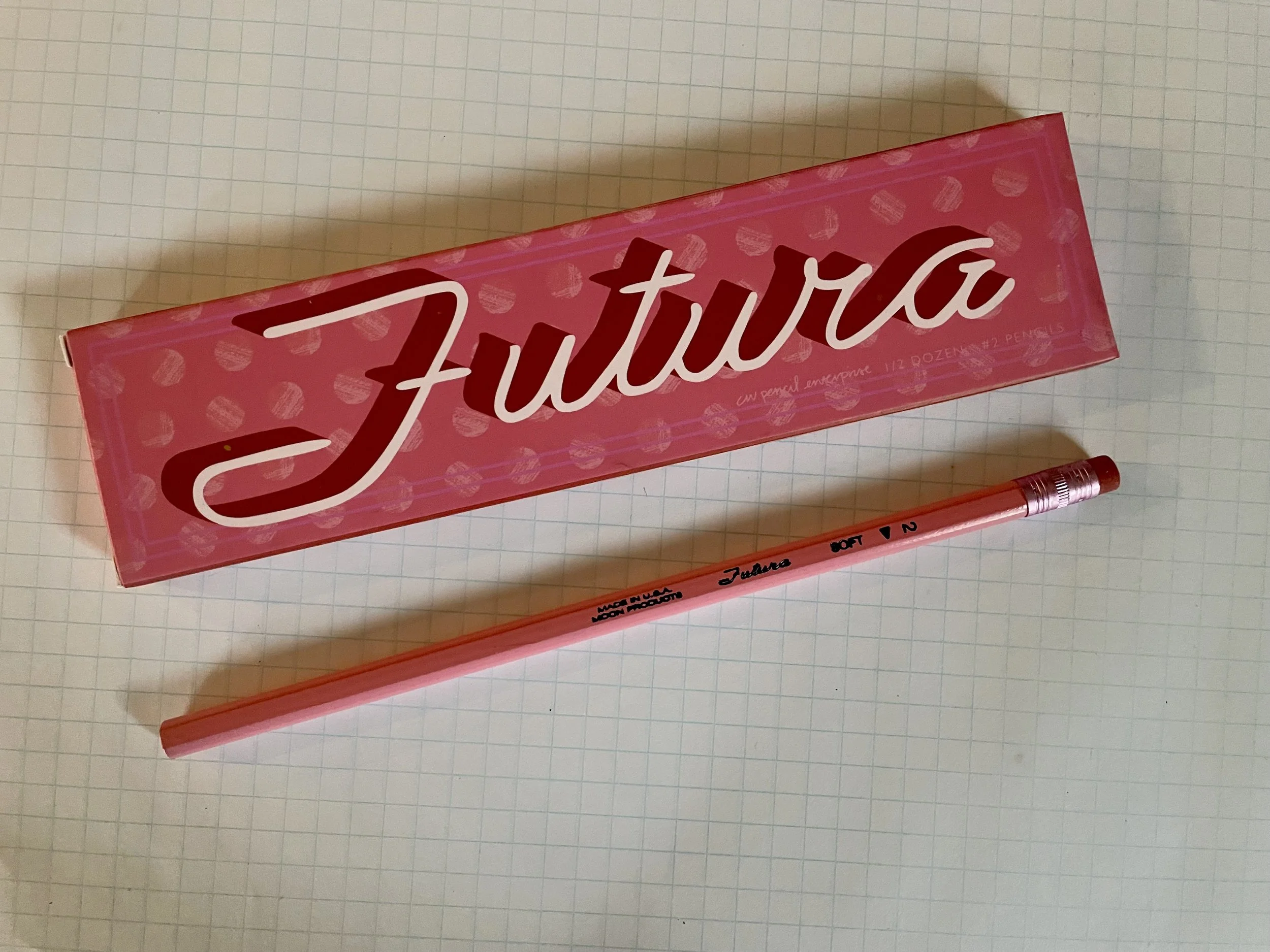
The Futura pencil was first made in the 1950s by Richard Best Pencil company of New Jersey. That company was acquired by Moon Products - one of three remaining pencil factories in the US. Caroline Weaver of CW Pencil Enterprise brought the Futura pencil back to life, commissioning Moon Products to produce some for her now-closed pencil shop on the Lower East Side in NYC. Marketed as “the pencil of tomorrow” the Futura feature an all pink color scheme, mid-century typography and Best’s signature “Try-Rex” shape which has three flat edges and three rounded edges. It's made by taking an initially rounded barrel and cutting down/flattening three sides. This pencil is so stinkin cute I love it.